You would have to have been living under a rock not to have noticed the shift in food marketing over the last few years towards protein.
Protein, protein, protein everywhere! We’re being sold the idea that if we don’t eat enough protein we’re at risk of withering away.
Veganism is out and protein is in. A few friend recently told me that they would choose to go plant based, but they worry that they wouldn’t get enough protein in their diet!
The fact remains that most people do get enough protein in their diet, it’s actually fibre intake that is where the average Scottish person is lacking.
So, this marketing nonsense has worked. I say nonsense, because recently published scientific review had ranked protein sources in order of how nutritional they are to humans, looking at the completeness of each protein – so, whether it contained all the amino acids that humans need to survive – and guess what?
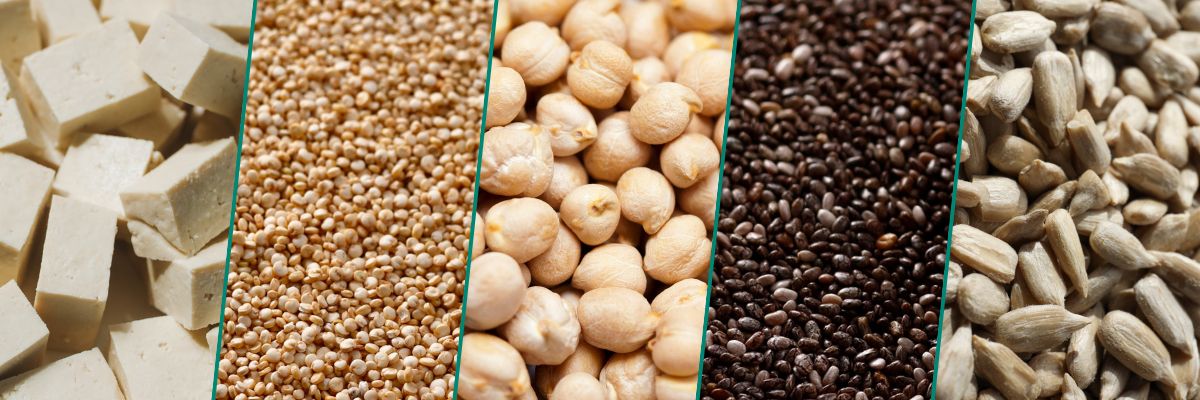
The top three protein sources in the world are all vegan! Tofu, chia seeds and beans. In fact, tofu has been crowned the prince of protein by a scoring system that measured not only human health, but also sustainability and affordability.
Dr Chris MacDonald – a behavioural scientist at the University of Cambridge and director of the Better Protein Institute – ranked 20 high-protein products, considering both their impact on the planet and humans.
Overall, plant-based proteins consistently scored higher than animal products, with tofu, chia seeds and beans at the top of the overall leaderboard.
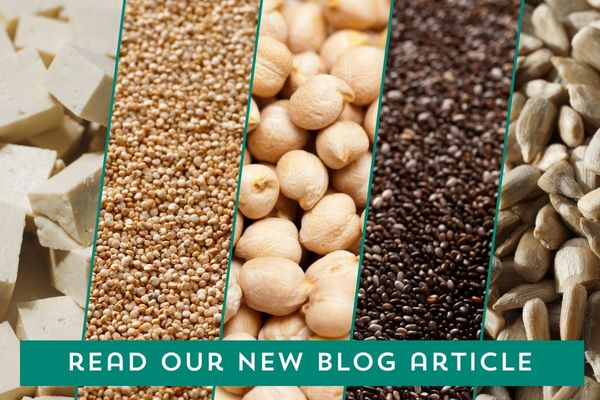
As it’s National Vegetarian Week, we thought this would be an excellent time to talk you through the top five sources of protein that we sell at Greencity.
Check out our website for many more vegetarian options, but only after you’ve read this of course.
1. TOFU
We sell seven different brands of tofu across catering and retail, from marinated, braised, flavoured and smoked to plain old regular tofu. Personally, I like using plain tofu and adding my own flavours. The flavoured ones are quicker of course and make an excellent addition to a mid-week pasta dish. In fact, the basil tofu by Taifun is a real winner with my young family and pairs remarkably well with pesto pasta.
If you’re using regular tofu, I have two tips to help improve the texture and make it more ‘meaty’, if that’s what you’re after.
Freezing and defrosting tofu before cooking is an excellent technique as the water inside the tofu expands into ice crystals when frozen. These crystals push apart and break down the original soy protein structure. Then when the ice thaws and drains away, it leaves behind tiny air pockets and a sponge-like network. This porous, honeycomb-like interior acts like a sponge, soaking up marinades and sauces much faster than fresh tofu. And because much of the excess moisture escapes naturally upon thawing, you can cut out the pressing process.
Another excellent, and less time-consuming way to pre-treat tofu is to boil it in salted water. This method relies on osmosis to improve the texture, as the salty water pulls water molecules out from inside the tofu while allowing a small amount of salt to diffuse inward for light seasoning. The heat from the water slightly loosens the soy proteins, opening microscopic channels so sauces and marinades penetrate in seconds instead of hours. It firms the exterior and interior, making the block less crumbly and much easier to pan-fry, bake, or air-fry and in my experience, with the addition of a little corn flour to the shallow frying, the overall effect is a crisper outside and a softer, juicier interior.
Absolutely delish! Total chef’s kiss.
2. CHIA SEEDS
Chia Seeds provide about 4 to 5 grams of protein per two-tablespoon serving, making them a high-quality plant protein source. They are known as a complete protein as they contain all nine essential amino acids that your body cannot make on its own. But these magic little seeds pack a whole lot more than that! They are a wonderful source of Alpha-linolenic acid (ALA), a healthy plant-based Omega 3 fatty acid, (very good for your brain) and they even supply important bone-health minerals like calcium, magnesium, and phosphorus.
We sell chia seeds in retail packs and also in bulk 1kg, 10kg and even 25kg! There are plenty of ways to incorporate these into a vegetarian diet, soaked in plant milk they make a delicious pudding which can be added to smoothies or granola bowls. They can even be used as an egg replacer in vegan recipes. And they’re not even expensive! 1kg of organic chia seeds is currently selling at just £7.25
3. BEANS
Beans, beans beans, where do we even start with beans! There have been recent government initiatives to implore people to eat more beans and no wonder. They are so much more sustainable as a protein source than meat or dairy, they’re full of protein, fibre, iron and vitamins. And they’re excellent value too! And all beans are high in amino acids, the building blocks of protein.
The brand Bold Beans have made it their mission to not only increase the beans we eat but more importantly to increase the quality of precooked beans on the market and boy have they done that.
Their multi-award-winning beans are cooked slowly in water inside the glass jar that they’re sold in. Meaning that you get not only the sumptuously soft beans, but the delicious, thick, umami flavoured and nutritionally dense cooking liquid. Bold Beans sell black beans, kidney beans, white beans in deliciously plump ‘Queen’ varieties.
Their range has expanded to include catering size tins of the big hitters- black, butter, kidney and chickpea and they’ve even introduced really high end, ‘posh’ baked beans. Of all the other beans we sell, black beans rank the highest level of protein with about 15 grams of protein per cooked cup.
We sell black beans dried, in cans and even cooked in jars from the wonderful Bold Beans range, I would highly recommend giving them a try if you’ve not done so by now!
4. QUINOA
Quinoa provides about 8 grams of complete protein per cooked cup, and unlike most plant foods, it contains adequate amounts of all essential amino acids—including lysine, which is typically missing in other grains. Supplying a full spectrum of amino acids helps your body repair tissue and build muscle after exercise. Coupled with high protein, quinoa is also high in fibre (about 5 grams per cup) which helps slow digestion, keeps you full longer, and helps manage your appetite. Quinoa can be added to salads including taboulleh, also porridges and stews like one pot Mexican stew. It can even be used as a rice substitute. All of the quinoa we sell is organic, and we have three varieties- original, red quinoa and tricolour which are all available in retail or bulk packs and which all pack the same powerhouse of a protein punch!
5. SUNFLOWER SEEDS
Sunflower Seeds provide about 5.5 to 6 grams of plant-based protein per 28-gram serving, making them a nutrient-dense addition to your diet. Other health benefits of sunflower seeds is that they may help lower blood pressure, cholesterol and blood sugar as they contain vitamin E, magnesium, protein, linoleic fatty acids.
It’s easy to add sunflower seeds to your diet by adding to nut mixes, trail bars or sprinkling over salads.
We have made it even easier however by adding the Sunflower Family brand to our range. Sunflower Family make all their products with organic sunflower protein, which gives you 53.8g protein per 100g.
The range includes mince, chunks, burger mix and bolognese and I can confirm that they’re all delicious! It’s quite an unusual texture as it’s light and springy, with a good bite but is also dense enough to work really well as a meat substitute. Their sunflower seeds are harvested organically in Europe, processed in Germany and packaged for retail using recycled paper and eco-inks.
So there you have it, protein is important, we all know that. Knowledge is also important and isn’t it lovely to know that the top three protein sources in the world are vegan!
Next time somebody asks me where vegans get their protein from, I’ll be spitting these facts.